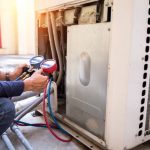

Refrigerant line sets are often overlooked components in air conditioning systems, yet they play a crucial role in determining the efficiency and performance of these units. These line sets consist of two copper pipes that connect the outdoor condenser unit to the indoor evaporator coil. One pipe carries refrigerant in its gaseous state from the indoor unit to the outdoor unit, while the other returns it as a liquid to complete the cycle. The importance of these line sets cannot be overstated when considering overall air conditioner efficiency.
First and foremost, proper sizing of refrigerant lines is essential for optimal system performance. If the lines are too small or too large, they can cause significant inefficiencies. Lines that are too narrow may restrict refrigerant flow, leading to increased pressure drops and reduced cooling capacity. Conversely, oversized lines can result in inadequate oil return to the compressor, potentially causing long-term damage and reducing system lifespan.
Moreover, insulation quality on these HVAC line sets is vital for maintaining energy efficiency. Poorly insulated lines can lead to thermal losses where heat is either absorbed or lost during refrigerant transit between units. This not only decreases cooling effectiveness but also forces the system to work harder than necessary, increasing energy consumption and utility bills over time. High-quality insulation materials help prevent such losses by maintaining consistent temperatures within the pipes.
The installation process itself also significantly impacts how well an air conditioning system performs with regard to its refrigerant lines. Proper installation ensures secure connections without leaks that could compromise system integrity or reduce cooling effectiveness due to loss of refrigerant charge over time. Even minor leaks can have cumulative effects on both operational costs and environmental impact due to potential release of harmful chemicals into our atmosphere.